

In a second passport strategy, the passport is not the product — it is the outcome. For investors exploring citizenship by investment, that distinction matters because a passport can do more than widen travel options; it can reflect access to another legal system, another set of rules, and another layer of optionality for a family or business owner. The Henley Passport Index is updated monthly, uses IATA-based data, and covers 199 passports across 227 destinations, which is a useful reminder that mobility is dynamic, not permanent. In 2025, Henley’s own reporting showed Singapore and Japan at the top of the table while the U.S. had slipped to ninth, proving that passport value can move quickly even when a country’s reputation seems stable. ([henleyglobal.com](https://www.henleyglobal.com/passport-index/methodology))
Why Most People Choose the Wrong Second Passport Strategy
The ranking trap
Most investors begin with the easiest number to compare: visa-free destinations. That is understandable, but it is also where many decisions go wrong. A passport can look impressive on a ranking page and still be the wrong fit if your real objective is tax flexibility, family continuity, banking confidence, or a politically stable base for future decisions. In practice, people often confuse a headline metric with a complete answer. Henley’s methodology shows why that is risky: the index relies on IATA data, cross-checks governments and public sources, and updates throughout the year, which means the score you saw last month can shift without warning. ([henleyglobal.com](https://www.henleyglobal.com/passport-index/methodology))
Another common mistake is treating speed as the same thing as value. A fast passport or residence route can be useful, but only if the legal package behind it supports your broader plan. Investors sometimes buy what is popular, not what is aligned. They want the passport their peers discuss, the program with the loudest marketing, or the shortest timeline. But the real question is whether the jurisdiction fits your balance sheet, your reporting profile, and your family’s future needs. A passport that solves only one problem can create three more.
- Speed-first thinking: Some buyers only want the quickest route. Speed is useful, but only if the country, due diligence process, and long-term rights make sense.
- Ranking-first thinking: A high visa-free count is attractive, yet it may not address tax exposure, succession planning, or where you actually spend time.
- Trend-chasing: Following the latest online recommendation can be expensive if the underlying program does not fit your family or business model.
That is why the most expensive mistake is often not paying too much; it is paying for the wrong objective.
The Difference Between Optimization and Alignment
Optimization is tactical
Optimization asks, “How do I maximize one variable?” It focuses on the immediate win: faster issuance, a larger travel list, or a lower minimum outlay. There is nothing wrong with that instinct. In fact, investors should care about cost, speed, and convenience. But optimization alone can produce a brittle outcome if the status does not work in the rest of your life.
Alignment is strategic
Alignment asks a different question: “Does this option fit my long-term structure?” A strong second passport strategy should support where you live, where you bank, how you invest, and what your family may need five or ten years from now. That is why the cheapest route is not always the best route, and the fastest route is not always the safest route. Alignment is about coherence. It is about choosing a legal status that strengthens your position instead of simply adding a document to your portfolio.
| Lens | What it prioritizes | Hidden risk | Better question |
|---|---|---|---|
| Optimization | Speed, price, or visa-free reach | Shallow fit and future regret | What single metric am I chasing? |
| Alignment | Tax, mobility, family, and jurisdictional fit | Requires more analysis upfront | Will this still make sense in 5 years? |
| Investor-ready decision | A balanced mix of value and resilience | Needs expert input | Does this solve the real problem? |
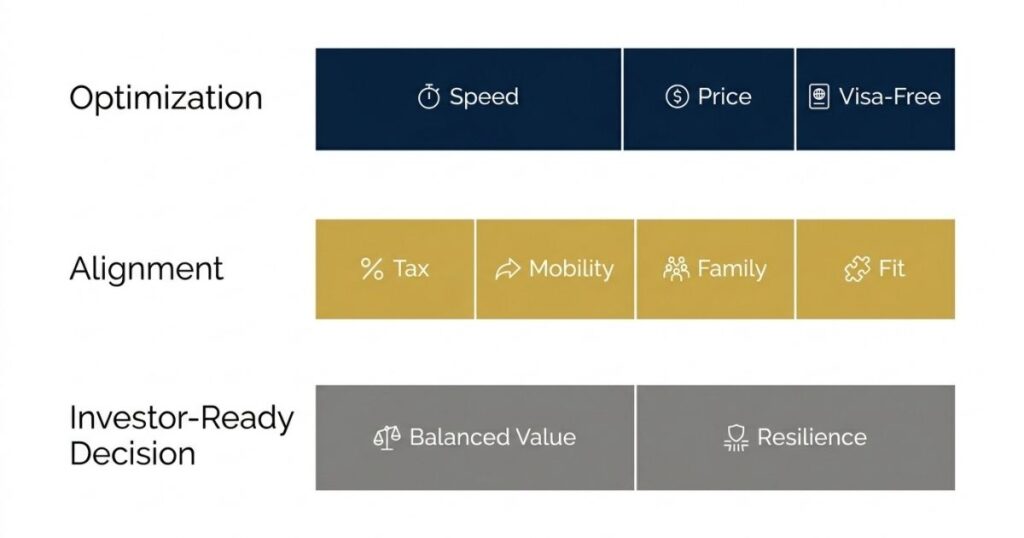
Use the chart above to stress-test every option against your real objectives. If a passport only improves one KPI while weakening three others, it is usually a sign that you are buying a headline, not a solution.
What a Legal Relationship With a Country Really Means for Investors
Rights, duties, and optionality
A passport is useful because it sits inside a legal relationship. It can support travel, but it can also influence the way you interact with a country’s systems over time. That may include residence options, family planning, access to local institutions, and the credibility that comes with being linked to a stable jurisdiction. This is why investors should not confuse a document with the deeper system around it. The document matters, but the legal status behind it matters more.
The UAE Government Platform, for example, lists Golden Visa routes that include a minimum capital of AED 2 million. That single figure is useful because it shows how long-term residence is anchored in a defined legal and financial threshold rather than a simple travel perk. In other words, the value is not just mobility. It is a package of rights, obligations, and planning choices that investors should assess carefully. ([u.ae](https://u.ae/en/information-and-services/visa-and-emirates-id/residence-visas/golden-visa?utm_source=openai))
Residence is not citizenship
One reason investors get confused is that residence and citizenship are often discussed in the same conversation, even though they serve different purposes. Residence can be a powerful entry point, especially if you want flexibility without changing nationality. Citizenship is deeper: it can create a more enduring bond with the state and, in some cases, broader family benefits. A second passport strategy should therefore begin by asking whether you need temporary access, long-term residence, or full citizenship — because each answer leads to a different legal and financial path.
- Mobility: What countries do you need to enter more easily?
- Structure: Do you need residence, citizenship, or both?
- Continuity: How will the status affect your spouse, children, and succession planning?
- Compliance: What reporting, tax, or documentation duties come with the route?
Henley also reminds users that visa information should be verified before travel arrangements are made, which is exactly the discipline investors should apply before committing capital. If the rules can change for travel, they can also change for residency and citizenship planning. ([henleyglobal.com](https://www.henleyglobal.com/passport-index/methodology))
How Investors Should Choose the Right Path
A practical investor checklist
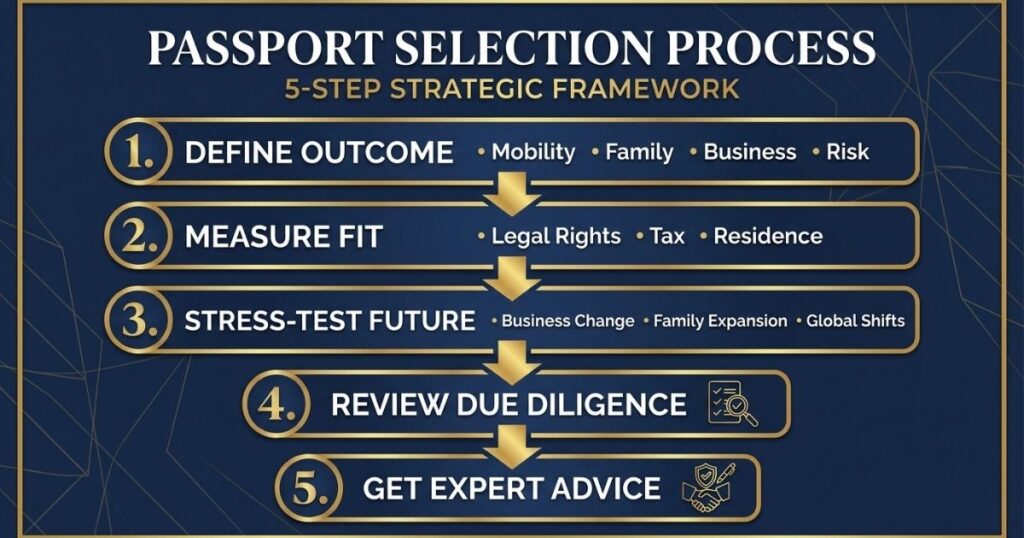
For most high-net-worth families, the right process is simple but rigorous: define the objective, compare the route, and test the consequences before you apply. Start by deciding whether you need citizenship, residence, or a staged plan that uses both. Then compare jurisdictions on more than speed. Ask what changes in your tax exposure, how the legal status fits your banking footprint, and whether the country is a place you would actually want to live, invest, or pass on to the next generation.
- Define the outcome. Are you solving mobility, family security, business access, or jurisdictional risk?
- Measure the fit. Compare the legal rights, residence rules, and tax implications of each option.
- Stress-test the future. Ask what happens if your business changes, your family expands, or global rules shift.
- Review the due diligence burden. A credible program should be transparent about documentation, checks, and timing.
- Get advice before you commit. The right structuring can save more than the wrong headline ever could.
If you want to compare routes, start with our citizenship programs overview, then read second passport benefits and our investment migration services page. If a Caribbean route is on your shortlist, our Caribbean citizenship guide is a useful next step. When you are ready, contact us for a tailored discussion.
The best passport decisions are not made by chasing the loudest marketing claim. They are made by aligning rights, risk, and capital with the way you actually live. That is the real point of a second passport strategy: better structure, better optionality, and fewer surprises.
Information accurate as of May 2026. Program rules change frequently — contact Adeniyi Associates for current guidance.