
Everything You Need to Know About the Greece Startup Visa in 2025

Unlocking New European Residency: Everything You Need to Know About the Greece Startup Visa in 2025

In late 2025, Greece unveiled a trailblazing residency pathway for ambitious global investors and entrepreneurs: the Greece startup visa. This program, officially rolled out under the country’s expanding residence-by-investment framework, offers non-EU nationals a strategic entry point into Europe — combining startup support with long-term residence prospects. But like any immigration-linked investment route, it comes with unique requirements, expectations, and risk considerations you must understand before moving forward.

In this in-depth guide, we break down what the Greece startup visa entails, how it compares with other European programs, practical considerations for applicants, and why it’s gaining attention among global entrepreneurs.


What Is the Greece Startup Visa?

The Greece startup visa is essentially a Golden Visa-style residence permit offered to non-EU citizens who invest in innovative, early-stage Greek companies. Instead of the more traditional real estate investment option (which is still available), this program focuses squarely on supporting the startup ecosystem and attracting global capital into emerging businesses across Greece. Greek City Times+1

Here’s the core idea:

👉 Investors provide a minimum €250,000 injection into a qualifying Greek startup.

👉 In return, they receive a one-year Greek residence permit, renewable for up to five years so long as conditions continue to be satisfied. IMI Daily

This framework reflects Greece’s strategic pivot toward a knowledge-driven economy — one that encourages job creation, innovation, and long-term economic growth within the EU. Buch-dein-Visum.de


Key Requirements: €250,000 + Ownership & Job Targets

Unlike some other residency by investment routes, the Greece startup visa has specific structural rules tied to both investment and operational performance:

1. Minimum Investment Threshold

To qualify, you must invest at least €250,000 in shares, equity, or qualifying capital instruments of a startup registered on the Elevate Greece startup registry — an official list of approved companies. Greek City Times

This amount places the program at the lower end of European entry thresholds for startup-linked residency, making it attractive on paper compared with other EU options (like Spain or Portugal). IMI Daily

2. Ownership Limit: Max 33% Rule

One of the most talked-about aspects of the Greece startup visa is its ownership ceiling: no investor may hold more than 33% of voting rights or share capital in the startup. Greek City Times

This rule is designed to prevent full control and encourage a more distributed shareholder base — but it also means that:

  • Investors cannot run the company as a majority owner, and

  • Strategic influence on business decisions may be limited compared to traditional founder roles.

Legal experts have noted this restriction can create an “asymmetry between investment risk and control rights,” especially if the company encounters unforeseen challenges. IMI Daily

3. Job Creation & Operational Compliance

Approval and renewal of the Greece startup visa are tied to job performance:

  • The startup must create at least 2 full-time positions within the first year of investment.

  • These jobs must be maintained continuously for at least five years. IMI Daily

If these conditions are not met, the residence permit can be denied renewal — even if reasons for job losses stem from factors outside an investor’s control (such as shifts in market conditions). Greek City Times

4. Continued Investment Commitment

If an investor exits the startup or the company fails, residency isn’t automatically forfeited — but to maintain status, the investor must make a new qualifying investment within two months. Otherwise, the permit could lapse. IMI Daily


Permit Validity & Renewal Strategy

Upon securing approval, the Greece startup visa provides:

  • A 1-year initial residence permit, followed by

  • Subsequent renewals every two years, assuming all program criteria continue to be met. Greek City Times

After five years of compliance, investors can seek long-term residency renewal or explore permanent residency or citizenship pathways (subject to separate Greek naturalization rules).

Unlike some EU programs, the Greece startup visa does not mandate continuous physical residency in Greece, which means investors can still travel freely or split their time across countries while holding the permit. Buch-dein-Visum.de


Who Is the Greece Startup Visa Best Suited For

Ideal Candidates

✔️ Entrepreneurial investors seeking a foothold in the EU without buying property.

✔️ Individuals with a venture-oriented mindset, comfortable with early-stage business risk.

✔️ Investors interested in building operational ties to Greek innovation ecosystems (e.g., tech, biotech, digital services).

✔️ People who want a residency strategy integrated with business participation rather than passive asset ownership.

Potential Challenges

⚠️ Given the ownership cap and job-creation obligations, the program may not suit everyone — particularly if your top priority is residence certainty above business risk.

⚠️ If a startup fails — as many early-stage ventures do — you must find a replacement investment quickly to maintain your residency rights. IMI Daily

⚠️ The program’s complexity may require legal, financial, and operational planning support to navigate compliance successfully.

That’s exactly where expert guidance becomes essential — and why many investors turn to trusted advisors for tailored support.


How the Greece Startup Visa Compares with Other European Programs

Program Minimum Investment Control Rights Job Requirements Residency Path
Greece Startup Visa €250,000 ≤33% cap Yes (2 jobs) Renewals + long-term options
Portugal Startup-linked visas €250,000–€350,000 Variable Operational benchmarks Fast-track permits
Spain Entrepreneur Visa ~€500,000 Founder-led Business plan obligations Long-term residency

Note: Thresholds and conditions can change over time, so always verify current rules with official sources. IMI Daily


How to Apply & What to Expect

Applying for the Greece startup visa typically involves:

  1. Selecting a qualifying startup (registered on the national registry).

  2. Making the required capital investment by transferring funds through regulated banking channels.

  3. Submitting documentation including investment proof, personal credentials, and compliance evidence to Greek authorities.

  4. Demonstrating job creation and ongoing business activity to qualify for renewals.

For investors looking for structured support, working with professionals experienced in Greek immigration law — as well as strategic migration planning — can make a significant difference in timelines and outcomes.


Looking Ahead: Is the Greece Startup Visa Worth It?

The Greece startup visa is an innovative addition to the global landscape of residency programs. It offers a compelling blend of:

✨ European residence access,
✨ Engagement with dynamic business ecosystems, and
✨ Competitive investment thresholds. Greek City Times

However, because it ties residence to specific business performance metrics and ownership limitations, it’s not a cookie-cutter solution. Like all investment immigration pathways, due diligence, professional guidance, and solid business planning are critical to success.

If you’re considering long-term European residency through entrepreneurship or investment, the Greece startup visa deserves careful consideration — and it may very well be the strategy that unlocks your next global opportunity.


Need Expert Support?

At Adeniyi Associates, we specialize in second citizenship and residency programs worldwide. Whether you’re evaluating the Greece startup visa or other opportunities — including Caribbean programs, EU residency routes, or bespoke immigration strategies — our experts can guide you through every step.

📩 Visit our homepage to learn more and start your journey: www.adeniyiassociates.com

Caribbean Passport: Unlock Visa-Free Travel to Schengen Countries

Unlocking Global Mobility with Caribbean Citizenship by Investment

For investors and global travelers, a second passport obtained through citizenship by investment programs in the Caribbean offers unmatched advantages—chief among them is visa-free access to the Schengen Area. This access allows citizens of Caribbean countries like Saint Kitts & Nevis, Antigua & Barbuda, Dominica, Grenada, and Saint Lucia to travel freely to 26 European countries for up to 90 days within any 180-day period. Given the ongoing global demand for flexible international mobility, Caribbean passports continue to be among the world’s most valuable second passports.

These countries’ citizenship by investment programs attract worldwide investors seeking quick, secure access to global markets and leisure destinations without visa hassles. The Schengen visa-waiver regime currently lists these Caribbean nations as visa-exempt for short stays, reinforcing their passports as potent tools for international freedom.

[INSERT INSIDE IMAGE 1 HERE – Infographic/Data Visualization]

Current Visa-Free Travel Benefits for Caribbean Passport Holders

Holders of eligible Caribbean passports enjoy travel privileges allowing entry into all Schengen countries without applying for a visa. This includes popular European destinations like France, Germany, Italy, the Netherlands, and Spain. The visa-free access enables:

  • Short-term tourism and business trips of up to 90 days within any 180-day period
  • Ease of entry with just a valid passport without additional paperwork
  • Access to multiple countries within the Schengen zone on a single passport

This level of access enhances business opportunities, leisure travel, and strengthens personal and professional networks across Europe.

Investment Requirements and Options in Caribbean Citizenship by Investment Programs

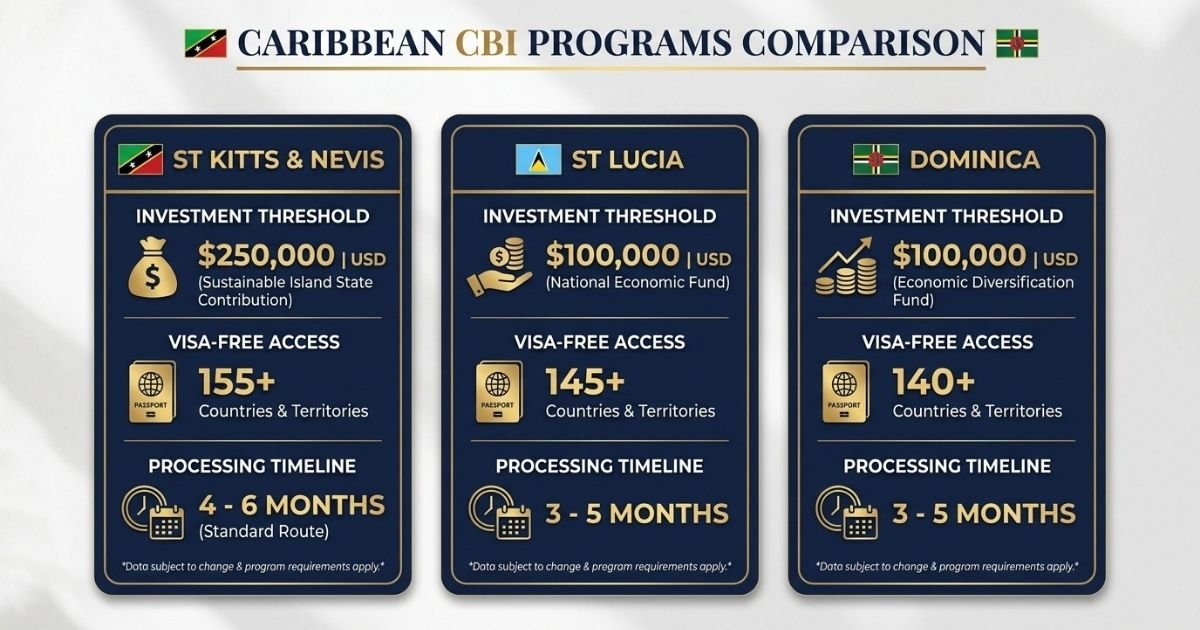
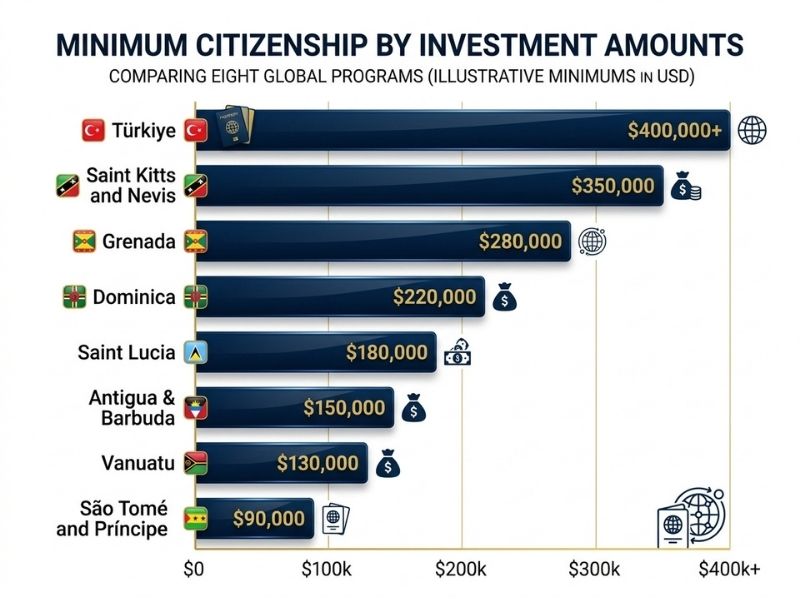
Each Caribbean country offers multiple routes for citizenship acquisition through investment, including real estate purchases, non-refundable contributions to government funds, or business investments. Below is a comparison of leading programs:

Country Investment Option Minimum Amount Processing Time
Saint Kitts & Nevis Real Estate or Donation $200,000 – $400,000 3-6 months
Dominica Government Fund Donation $100,000 3-4 months
Antigua & Barbuda Real Estate or Donation $200,000+ 3-6 months
Grenada Business Investment or Real Estate $150,000+ 4-6 months
Saint Lucia Donation or Real Estate $100,000+ 3-4 months

Important Considerations About Visa-Free Access to Schengen Countries

It is important to note that while the visa-free travel privilege is currently intact, the European Union has recently voted to create a new visa waiver suspension mechanism for countries whose travel documents raise security or migration concerns. This development has sparked uncertainty among Caribbean citizenship-by-investment countries, as EU officials have held meetings with representatives of these nations to discuss the future of visa-free access.

“Caribbean investors and travelers have long prized the region’s ‘golden visa’ passports for the coveted ability to glide into the 26-nation Schengen area without a visa.” — IMI Daily

[INSERT INSIDE IMAGE 2 HERE – Comparison Chart/Statistical Visualization]

Benefits of Choosing a Caribbean Second Passport with Schengen Visa-Free Access

  1. Enhanced Travel Freedom: Access 26 European countries visa-free for short stays, ideal for business, tourism, or family visits.
  2. Quick Application Process: Programs typically process citizenship applications within 3-6 months, much faster than other second passport options.
  3. Multiple Investment Options: Investors can choose from real estate, government funds, or business ventures to meet eligibility.
  4. Family Inclusion: Applicants can include dependents such as spouses, children, and sometimes parents, extending benefits to families.

Key Points to Monitor

Applicants should stay informed on the evolving EU stance on visa-free travel for Caribbean passports. While no immediate changes have been enforced, the new suspension mechanism proposed by the EU Parliament indicates potential future restrictions. Maintaining compliance with all legal requirements and transparency throughout the application process is crucial to ensuring uninterrupted travel privileges.

Recent Updates and What to Expect Moving Forward (As of June 2024)

As of June 2024, Caribbean governments remain engaged with EU discussions about maintaining visa-free access. The EU parliament’s approval of a visa waiver suspension mechanism signals a more cautious approach, but no immediate suspensions have been enacted. Caribbean prime ministers have acknowledged that visa-free travel may face limitations before the end of the year, urging stakeholders and passport holders to prepare accordingly.

Despite this, the current situation continues to offer substantial benefits for investors, travelers, and businesses leveraging Caribbean passports for global mobility.

Conclusion

Obtaining a second passport through citizenship by investment in the Caribbean remains one of the most viable and attractive ways to secure visa-free travel access to Schengen countries. This privilege supports efficient business dealings, tourism, and family visits across Europe. Adeniyi Associates is dedicated to providing expert advice and tailored support to navigate the complexities of Caribbean citizenship programs, ensuring you maximize the benefits of global mobility.

Disclaimer: This information is verified as of June 2024. Prospective investors should consult with Adeniyi Associates for the most current program details and personalized assistance.

Caribbean Second Passport by Investment: New Residency Requirement Explained

Caribbean Second Passport by Investment: New Residency Requirement Explained

For decades, Caribbean countries have led the world in offering investors a second passport by investment — a pathway to global freedom with minimal or no residency obligation. But 2025 marks a turning point.

Governments across the region are introducing new residency requirements and biometric verification systems to enhance transparency and satisfy international partners. While the changes are not yet identical across all five countries, they signal a clear shift toward stronger “real link” policies for new citizens.

Here’s everything investors need to know about the upcoming Caribbean residency requirements and how they impact second citizenship plans.


Why the Residency Rule Is Being Introduced

Caribbean citizenship-by-investment (CBI) programmes have faced increasing scrutiny from the European Union and United Kingdom, who grant visa-free travel to these nations.

Their concern? That individuals could acquire Caribbean passports without ever setting foot in the country.

To protect these valuable visa privileges and ensure programme integrity, governments are implementing residency clauses that demonstrate a genuine connection between the investor and the host nation.

This change does not eliminate fast-track citizenship — it simply introduces minimum stay or physical-presence expectations to align with global standards.


The Five Caribbean CBI Nations and Their New Residency Directions

🇰🇳 Saint Kitts & Nevis: Residency and Biometrics Coming in 2025

In June 2025, Prime Minister Terrance Drew announced that Saint Kitts & Nevis will adopt new residency and biometric requirements under its upcoming CBI legislation.

Applicants will soon need to make a short in-country visit for identity verification and biometric registration before or shortly after citizenship approval.

This initiative positions Saint Kitts & Nevis as a regional leader in responsible programme reform and international cooperation.

Source: Government of Saint Kitts & Nevis – SKNIS.gov.kn, June 2025


🇦🇬 Antigua & Barbuda: Five Days Within Five Years

Antigua & Barbuda already enforces one of the clearest residency requirements in the region: new citizens must spend a minimum of five days in the country within the first five years of citizenship.

While the rule does not require residence before passport issuance, it underscores the region’s move toward genuine national participation. Failing to meet this requirement can affect passport renewal.

Source: Official CBI Unit Antigua & Barbuda / CitizenX.com


🇩🇲 Dominica: Watching the Regional Shift Closely

Dominica’s programme remains efficient and does not currently impose any pre-issuance residency requirement. However, officials have voiced support for harmonised regional reforms through the upcoming Eastern Caribbean Citizenship-by-Investment Regulatory Authority (ECCIRA).

Observers expect that a post-citizenship presence requirement — such as 30 days within five years — could soon become part of the legal framework.

Source: ECCIRA Draft Legislative Framework, 2025


🇱🇨 Saint Lucia & 🇬🇩 Grenada: Preparing for Harmonisation

Both Saint Lucia and Grenada are aligning with ECCIRA’s reform agenda. The current draft regional policy proposes:

“All approved citizens shall spend a minimum of 30 days cumulative physical presence within five years of obtaining citizenship.”

If enacted, this will harmonise standards across participating nations and protect their collective reputation for high-integrity investment migration.


Understanding the ECCIRA Reform

The Eastern Caribbean Citizenship-by-Investment Regulatory Authority (ECCIRA) is a regional initiative to unify and regulate all participating CBI programmes.

Its proposed structure includes:

  • Shared due-diligence databases

  • Cross-border applicant monitoring

  • Unified marketing and compliance standards

  • A regional residency requirement to prove “genuine link”

By creating a central oversight body, ECCIRA aims to secure the region’s long-term access to international visa waivers while maintaining investor confidence.


What the New Residency Requirement Means for Investors

🕒 1. Adjusted Timelines

Applicants should anticipate potential in-person steps — such as biometric appointments or brief stays — that may extend processing timelines.

💰 2. Additional Travel and Accommodation Costs

Residency obligations may involve short visits or periodic stays. Investors should plan for travel, lodging, and documentation expenses, especially for family applications.

🔍 3. Enhanced Due Diligence

Governments are prioritising data verification and face-to-face identification. Biometric enrolment will improve programme credibility but may lengthen approval times.

🌍 4. Stronger Global Recognition

These reforms improve the perception of Caribbean passports internationally — strengthening their reputation and helping sustain visa-free travel access to the EU and UK.


Strategic Advice for Investors Seeking a Second Passport by Investment

✅ Confirm Official Implementation Dates

Announcements do not always mean immediate enforcement. Verify the start date of any residency or biometric rule directly with the CBI Unit or your licensed agent.

🧳 Apply Early While Current Rules Still Apply

Most Caribbean nations are phasing changes gradually. Applying before full enforcement could allow you to qualify under current residency-light conditions.

🤝 Work With Licensed Professionals

Partnering with a government-approved consultancy like Adeniyi Associates ensures your application remains compliant, complete, and strategically timed for upcoming reforms.


Why This Matters Now

The Caribbean remains one of the best destinations globally for a second passport by investment, offering security, privacy, and global mobility.

However, the introduction of residency requirements means the “no-stay” era is evolving into one of “real connection.” Investors who act now can enjoy the benefits of today’s flexible programmes while preparing for the higher standards of tomorrow.


🌴 Partner With Adeniyi Associates — Your Global Citizenship Experts

At Adeniyi Associates, we help clients across Africa, Asia, and the Middle East navigate the complexities of Caribbean citizenship programmes.

Our Dubai-based experts provide end-to-end support — from application preparation and documentation to coordinating travel and compliance with the latest residency requirement updates.

🔗 Visit: www.adeniyiassociates.com
📞 Contact: info@adeniyiassociates.com

Secure your second passport by investment — before the new residency rules take effect.

Family First: The Best CBI Programmes for Your Spouse, Kids & Parents

You may have focused first on obtaining a second citizenship for yourself — for travel, security, or diversification. But the real power comes when your whole family comes along for the ride. A second passport is most valuable when it protects not just you, but your spouse, children (even adult ones), and aging parents.

However, not all CBI programmes treat dependents equally. Age limits vary, health/disability rules differ, and the “cost to bring dependents” can shift one program from viable to prohibitive.

In this post, we’ll explore: what makes a program truly family-friendly, compare leading Caribbean CBI schemes, spotlight hidden traps, and offer insights to build a multi-generational legacy.


What Makes a CBI Program Truly Family-Friendly

Before comparing programs, let’s define the features that make one CBI scheme better for families than another.

Key Criteria for Family Inclusion

  1. Broad Dependent Eligibility

    • Spouse (obvious)

    • Children, often biological or legally adopted

    • Adult children (18–25/30) if they are in full-time education or financially dependent

    • Disabled children (beyond usual age limits)

    • Aging parents or parents-in-law (above certain ages)

    • Sometimes even siblings or grandparents

  2. Flexible Age Limits & Conditions

    • Many programs cap inclusion of children at 25 or 30 years, with conditions (must be in school, not married)

    • Some waive age limits for physically or mentally challenged dependents

  3. Reasonable Incremental Costs & Fees for Dependents

    • Each dependent typically adds due diligence, processing, and government administration fees

    • The marginal “cost to include” must not be so high as to make adding them impractical

  4. Legacy & Citizenship by Descent / Transmission

    • The ability for future children or generations to inherit citizenship, not just the immediate group

    • Whether citizenship passes indefinitely versus only one generation

  5. Stability, Legal Protections & Low Revocation Risk

    • Programs with constitutional or legal safeguards that prevent arbitrary revocation

    • Well-established programs with track records

  6. Administrative Ease & Post-Approval Inclusion

    • Some programmes allow adding dependents after the main applicant is approved (at set fees) NTL Trust

    • The inclusion process should be transparent and straightforward

With these in mind, let’s look closely at specific CBI programmes and how they compare.


Comparisons: Top Caribbean CBI Programmes for Families

Below is a comparative look at how major Caribbean CBI programmes perform on family criteria, followed by illustrative examples and caveats.

CBI Programme Strengths for Families Limitations / Conditions Legacy / Descent Notes
St. Kitts & Nevis Very broad dependent rules: children up to 30 (if studying), parents 55+, siblings in some cases Higher investment thresholds; strict due diligence; some additional fees for older dependents Citizenship by descent for children born later; can be passed indefinitely
Grenada Adult children to 30 years; unlimited generational transmission; no residency requirement Fewer special provisions for aging parents compared to others; real estate route has holding conditions Children born later automatically qualify by descent
Dominica Relatively generous inclusion; children 18–30 under education & support Some cap at 30; potential stricter due diligence waiting lists Citizenship by descent for children born later; but only one generation unless further rules apply
St. Lucia Multiple investment options; dependents up to 30 years under support, with age flexibility; newborn inclusion possible Slightly more complexity in fees for dependents; certain caps and conditions apply Citizenship by descent allowed for beneficiaries
Antigua & Barbuda Very family-oriented: children under 30, special disability allowance, ability to include dependents of children (future generations) Increased marginal fees for dependents; some limits on sibling/grandparent inclusion Some transmission rules to children born later under citizenship by descent laws

Real Examples & Observations

  • In Dominica, a family of four (main + spouse + two dependents) might see a total cost around USD 276,500 under current government fund + fees models.St. Lucia’s program requires the main applicant to contribute USD 240,000 for up to three dependents; each extra dependent aged 18+ costs another USD 20,000. Henley & Partners

  • Antigua & Barbuda allows for adding children after initial approval, but with fees tiered by age (e.g. ~USD 25,000 for children above 5, USD 10,000 for younger children in some cases) NTL Trust

  • Grenada is unique among Caribbean programs for offering U.S. E-2 visa treaty access to its citizens, which benefits children and descendants who inherit citizenship. CitizenX+2Global Citizen Solutions+2

These features make some programmes more family-friendly — but you’ll want to read the fine print.


Hidden Traps & Common Pitfalls to Watch

Even well-designed programmes have areas that catch investors by surprise. Here are some pitfalls to look out for:

  1. Steep Dependent Fees & Due Diligence Costs
    The cost to include a child or parent may be disproportionately high relative to the “main applicant” cost. This can shift program appeal.

  2. Age & Education Conditions
    Some programmes require that adult dependents be in full-time education or financially dependent. If that condition fails (e.g. the child graduates), they may lose eligibility.

  3. Post-Approval Inclusion Windows
    While some programmes allow newborns or children born after approval to be added, that often only works within a narrow window and requires extra fees. NTL Trust

  4. Limited or No Inclusion of Aging Parents
    In many programs, parents or in-laws must meet stringent age, dependency, or health criteria — and only a few programs allow them at all.

  5. Revocation or Conditional Citizenship Clauses
    Some programs include clauses granting authorities the power to revoke citizenship if conditions are not maintained. For families, such risk is amplified.

  6. Weak Legacy / Descent Restrictions
    Some programmes permit citizenship only for one generation; grandchildren or further descendants may have to reapply under a new scheme.

  7. Complex Compliance & Changing Rules
    Programs evolve; family rules that exist today might be tightened tomorrow. Always check latest official CBI unit rules.


Insights & Strategies for Maximizing Family Benefit

Here’s how to get the most value when putting your family at the center of your decision:

Prioritize Programs with Broad & Flexible Inclusion

If you have adult children, aging parents, or extended dependents, programmes like St. Kitts, Grenada, and Antigua tend to offer more breadth.

Build in Margin for Fees

Always budget extra — due diligence, legal, and dependent costs can push you 10–25% over baseline.

Capture Additions Early

If you expect more children or plan to add dependents later, pick programmes with post-approval windows and act early.

Use the Legacy / Descent Advantage

Favor programmes that allow unlimited or multi-generation transmission, so your grandchildren and further descendants benefit without reapplication.

Monitor Policy Shifts

CBI programmes evolve. Keep in touch with official CBI units, trusted agents, and legal updates. What works today may change tomorrow.

Combine with Residency / Citizenship Backup

Where possible, maintain or apply to residency programs for children or parents as fallback if CBI rules change.

Know the Trade-Offs

A program with low inclusion costs but weak legacy may suffice for a tight family unit. But if your plan is intergenerational, lean toward higher inclusion safety even if upfront cost is more.


The value of a second passport multiplies when your spouse, children, and even aging parents are protected. But that only happens if you choose the best CBI programmes for family inclusion, not just for yourself.

Some Caribbean programs excel in family features — but each has its trade-offs. Your ideal choice depends on your family makeup, generations you want to protect, and risk appetite.

If you like, I can prepare a tailored comparison for your family scenario (e.g. spouse + 2 children + parents) across CBI programmes, with full cost breakdowns and risks — so you choose with confidence. Would you like me to deliver that for adeniyiassociates.com?

Your Second Passport Isn’t Forever Visa Freedom — New EU & US Rules You Must Know

The Illusion of Unlimited Freedom

Imagine holding a second passport, feeling like you’ve unlocked a golden ticket to global mobility. You imagine breezing into Europe, the U.S., or anywhere your business or lifestyle takes you — no visa hassles, no friction.

But here’s a sobering truth: your second passport might not guarantee visa freedom forever. Recent changes in EU and U.S. policy, tighter enforcement, and legal challenges are shifting the ground beneath what once felt like a stable foundation of global citizenship.

If you’re considering or already hold a second passport, now is the moment to rethink — are you ready for these changes?

In this post, we’ll uncover the developments transforming visa access, highlight risks across popular citizenship-by-investment programs, and offer insights to future-proof your global mobility.


1 | Why Visa Freedom Is Under Pressure Now

Before diving into affected passports, let’s anchor what’s changed — and why.

Rising Regulatory Scrutiny & Legal Pushbacks

  • The EU’s top court recently ruled Malta’s “golden passport” scheme illegal, declaring that selling citizenship as a commercial transaction violates EU law. This decision pushes all investor-citizenship programs in Europe into deeper legal risk. The Guardian+1

  • Governments and multilateral bodies are rethinking trust: if citizenship is too easy to buy, the integrity of borders, immigration, and security could suffer — prompting stricter criteria, deeper vetting, and revocations.

From Loose Implementation to Stringent Enforcement

  • The Schengen Area already standardizes the “90 days in any 180 days” rule for visa-free stays for third-country nationals. European External Action Service+2Auswärtiges Amt+2

  • What many don’t realize: biometric and entry-exit tracking systems are now stronger. Border control systems will increasingly reveal usage patterns that suggest abuse — such as bouncing in and out under different passports.

  • Presenting more than one passport can backfire: border officials, linking biometric data or digital records, may flag dual use. As one authority notes, presenting two passports “will likely result in being denied entry/exit.” Italian Citizenship Assistance –

New U.S. Visa Developments & Restrictions

  • The U.S. is contemplating requiring visa bond deposits for certain business and tourist visa applications — up to USD 15,000 — which could raise the effective cost of traveling or re-entry. PBS

  • In 2025, the Trump administration signed an executive order suspending entry for nationals of certain countries — even holders of valid visas — under security grounds. This suggests a shift toward more politicized and fluid visa policies. Akin – Akin, an Elite Global Law Firm

  • Broader immigration-related rules (e.g. for H-1B or student visas) are tightening, reducing slack in the system and creating a more restrictive environment. American Immigration Council

The upshot: visa freedom is no longer just about getting a passport — it’s about staying on the right side of compliance, oversight, and shifting legal norms.


2 | Which Second Passports Are Under the Most Risk?

Not every second passport faces equal danger. Some programs offer more durability, others are more vulnerable.

Passport / Program Strengths (Visa Power, Speed, Brand) Risk Factors / Threats What To Watch Closely
Malta / EU Investor Citizenship EU mobility, strong brand, access to all EU states Already ruled illegal by EU court; potential retroactive revocations; political pushback Whether Malta pays compensation, transition rules, whether pending applications stop
Caribbean CBI programs (e.g. Grenada, Dominica, Antigua & Barbuda) Speed, relatively lower cost, good visa-power EU or U.S. could reevaluate visa waivers; dependency on due diligence; program changes or suspensions Maintaining reputation, updating compliance, monitoring announcements
Programs in newer / less established jurisdictions Potential for low cost, real estate tie-ins, or emerging treaties Higher instability; less legal insulation; weaker reputation Track geopolitical changes, bilateral visa treaties, sudden program freezes
European Residency → Citizenship pathways (not direct CBI) Slower, but structurally tied to EU systems Stricter residency rules; increased scrutiny Whether residency requirements tighten, forced integration, revocation clauses

Personal Insight — Walking the Tightrope

I once advised an investor who secured a Caribbean passport and assumed unlimited visa access. He traveled on that passport, often crossing in and out of Schengen multiple times, thinking each national passport would reset the clock. That’s risky. Border agents may not see things that way — biometric systems, inter-governmental data sharing, and consistency checks can reveal patterns.

In another case, an investor applied for Maltese citizenship (EU) in good faith, then got caught in the ECJ’s ruling after the fact. Even though his application was in process, his path now faces uncertainty.

A second passport is a tool — not a guarantee.


3 | How New Rules Can Erode Your Visa Power

Here are the tactics by which visa freedom may be reduced — deliberately or inadvertently.

📉 Revocations & Retroactive Clauses

Some citizenship programs include clauses permitting revocation if laws change or if fraud / misrepresentation is discovered. These legal “escape hatches” may get more frequent invocation post-crackdowns.

🔍 Visa Waiver Reassessments

Countries or regional blocs may reassess visa-waiver status of certain passports, particularly those acquired via investment, on the grounds of national security or immigration control.

🧾 Stricter Document & Compliance Requirements

  • Renewal or extension applications may demand deeper financial disclosure, proof of ongoing investment, or proof of residence.

  • Border control may scrutinize entry patterns more closely, linking data across passports and visa records.

🛂 Limits in Use (Schengen, ETIAS, etc.)

  • From Q4 2026, ETIAS will require travelers from visa-exempt countries (including many CBI passports) to apply for travel authorization. Dual citizenship won’t bypass that. Etias

  • The 90/180 rule in the Schengen area is enforced per person, not per passport. Multiple passports don’t reset the clock. Reddit+1

⚖ Judicial / Political Reversals

Programs are vulnerable to political changes — new administrations may terminate or restrict investor citizenship paths. The fate of Maltese golden passports is a case in point. The Guardian+1


4 | What Makes a “Safer” Second Passport?

Given these headwinds, what criteria should you use to choose or retain a second passport?

1. Legal & Constitutional Strength

Prefer programs backed by constitutional protections or strong legal standing. Malta had appealed to constitutional guarantees — yet the EU ruling superseded.

2. Visa Power & Reciprocity

Check not just current visa lists, but whether the passport is under review for removal from visa waiver lists. Countries with strong diplomatic ties and minimal risk profiles score better.

3. Track Record & Stability

Long-standing programs with solid reputations (e.g. certain Caribbean CBI schemes) may withstand scrutiny better than nascent ones. But even they are not immune.

4. Transparency & Compliance Practices

Programs with rigorous due diligence and transparent processes reduce the risk of fraud, revocation, or program suspension. Less friction now can reduce risk downstream.

5. Family Inclusion & Exit Options

Strong passports accommodate family inclusions (children, spouses, sometimes elders) and allow exit strategies (e.g. selling real estate, transferring citizenship benefits).

6. Built-in Resilience

A program that offers flexibility (e.g. investment + donation paths, modular options) gives you wiggle room if rules change.


5 | How to Future-Proof Your Visa Freedom

It’s not enough to pick the right passport — you have to manage it. Here are practical strategies:

✅ Maintain Compliance & Diligence

Keep your financials, tax filings, and documentation impeccable. Intentionally avoid patterns that might attract scrutiny (e.g. repeated short stays in countries that might suspect “abuse”).

✅ Use Best Passport at Borders

Where laws require, present the passport best aligned with your destination (for example, if holding an EU passport, use that for EU entry). This reduces friction.

✅ Stay Aware of Policy Shifts

Subscribe to policy alerts in the EU, U.S., and your passport country. Changes often come with notice — early awareness helps you pivot.

✅ Consider Dual Paths (Residency + Citizenship)

Rather than relying solely on citizenship by investment, maintain or secure residency in robust jurisdictions. If citizenship becomes contested, your residency may act as a fallback.

✅ Exit Strategy Planning

If visa freedom is stripped or curtailed, have contingencies — e.g. relocating to a jurisdiction where your second passport still holds value, or converting real estate investment to liquidity.


A second passport can feel like a ticket to global freedom — but new EU and U.S. rules are tightening the margins around that freedom. Visa power once taken for granted now demands active guarding, smart strategy, and foresight.

If you’re considering a second passport or already hold one, don’t rest on assumptions. Let’s work together to assess durability, compare alternatives, and build a strategy that survives policy storms.

👉 Want a personalized review? Tell me your citizenship program, travel priorities, or family structure — and I’ll map out which passports are safest and most resilient for www.adeniyiassociates.com readers.

1 2 3 9